Why do dentists recommend dental implants?
There are a number of compelling reasons why dentists recommend dental implants. As an advanced tooth replacement option, dental implants do have significant advantages over other tooth replacement methods. Here are some of the main advantages of dental implants that make them the first choice for many dentists and patients.
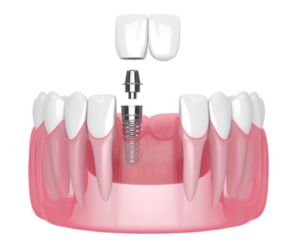
1. Natural look and feel
Compared to other traditional methods of restoring missing teeth, dental implants can look, feel and function similar to natural teeth. Especially from a functional perspective, whether it is a single tooth loss or a whole mouth of teeth loss, current implant materials and technologies can provide patients with perfect appearance and comfort. The appearance of dental implants is designed to mimic natural teeth. By using high-quality materials and fine manufacturing processes, dental implants can achieve an aesthetic effect that is almost indistinguishable from natural teeth. The most commonly used crown material is zirconium dioxide because of its good biocompatibility, translucent appearance and excellent strength. The color, shape and size of dental implants can be customized according to the patient's needs, so that they blend perfectly with the surrounding natural teeth and achieve a natural and beautiful effect. In terms of feel, although dental implants are the closest to natural teeth compared to other restorations, they are artificial objects after all, and there may be some differences. For example, dental implant crowns may not be as sensitive as natural teeth because they do not have the nervous system of natural teeth. However, this does not prevent dental implants from restoring normal chewing function, and patients can hardly feel the difference in daily life. Functionally, dental implants function very similarly to natural teeth and can restore functions such as chewing, speaking and smiling. Dental implants work through a biological process called osseointegration, which is the fusion of the implant with the jawbone to provide stable support. This allows dental implants to withstand bite forces and pressures similar to natural teeth. The bite force of dental implants can reach 38-45 kg, which is almost equivalent to the bite force of natural teeth, allowing patients to eat a variety of foods normally without discomfort or inconvenience. Osstem implants are one of the world's well-known dental implant systems. Its design and function are very similar to natural teeth. The advanced materials and technologies used can provide good biocompatibility and stability, helping patients restore beautiful smiles and normal oral functions, allowing them to smile, eat and participate in social activities without worries.
2. Improved chewing and speech
Implants can restore patients' full chewing ability, allowing them to eat their favorite foods without discomfort. Dental implants provide stable support through close integration with the alveolar bone, restoring chewing function to more than 95%, which means that patients can chew a variety of foods as easily as they would with natural teeth, including hard or chewy foods such as apples and nuts. In addition, dental implants can prevent slurred speech or mumbling that may occur with dentures, thereby improving speech clarity. Because dental implants are fixed to the jawbone, they will not move in the mouth like removable dentures, which makes patients more confident and clear when speaking.
3. Durability and lifespan
If properly cared for, dental implants can be used for a lifetime. They are made of biocompatible materials such as titanium, which can integrate with the jawbone and provide a stable foundation for artificial teeth. Osstem implants are known for their high success rate in clinical studies, ensuring reliable and long-lasting results. A multicenter clinical study analyzed the performance of 467 Osstem implants over a period of seven years and showed that the cumulative survival rate was 95.37%. This shows that Osstem implants have high stability and reliability in long-term use.
Another study evaluated the long-term clinical stability of Osstem CA surface implants, and the results showed that the survival rate of these implants was 97.3% and the success rate was 94.2% during an average observation period of 62 months. This further proves the high efficiency and stability of Osstem implants in long-term use.
The above results are due to the fact that Osstem implants are made of high-quality titanium metal with excellent biocompatibility and mechanical strength. And through special processes, osstem has increased the surface roughness of this material by 45%, increased the healing speed by 20%, reduced the risk of infection, and enabled patients to return to normal life faster, while also ensuring the long-term stability of the implant in the oral environment.
4. Prevent bone loss
Dental implants can stimulate the jawbone and prevent bone loss that usually occurs due to tooth loss. This helps maintain the natural structure of the face and jaw. First, the design and material of the implant enable it to integrate closely with the jawbone, a process called osseointegration. In this way, the implant transmits mechanical stress during chewing and biting, similar to the function of natural teeth, thereby stimulating the growth and remodeling of the jawbone. In addition, the presence of dental implants can effectively prevent the atrophy of the alveolar bone. After tooth loss, the alveolar bone in the missing part is prone to bone loss and atrophy due to lack of mechanical stimulation. The implantation of the implant can provide the necessary mechanical stimulation, promote the metabolic activity of bone tissue, and maintain bone density and structural integrity. This stimulation not only helps to maintain the health of the jawbone, but also prevents changes in facial structure and maintains the natural contour and beauty of the face. In a study involving 258 Osstem implants, the average marginal bone resorption was only 0.074 mm, showing an extremely low bone resorption rate. This is also the key to the long-term stability of the alveolar bone.
5. Protect adjacent teeth
Unlike dental bridges, dental implants do not require changes to adjacent teeth, which can protect the health and integrity of the surrounding teeth. This includes two dimensions: First, there is no need to grind adjacent teeth, and there is no need for adjacent teeth to make sacrifices in order to fit a fixed bridge. Not grinding teeth also avoids tooth sensitivity, dental nerve infection, and even root canal treatment due to excessive removal of tooth tissue. Second, it does not require the good teeth on both sides to "do the work of three people". The commonly used fixed bridge mode is two with one, using the good teeth on both sides to build a bridge to repair the missing teeth in the middle. It looks like three teeth, but there are actually only two roots underneath. Although after our calculations and years of experience, this burden is acceptable if the teeth on both sides are strong enough, it still makes the teeth on both sides suffer. There are also many patients who dare not use force for this repair method. With dental implants, one person does one thing, and his own crown is supported by his own implant, which does not affect the brothers on both sides.
6. High success rate
As mentioned earlier, as long as the maintenance is proper, dental implants can be used for many years, or even for life. So is this probability high? Let's take a look at the success rate of dental implants and whether it is a reliable choice for tooth replacement. Taking the implantation team of Peking University Stomatological Hospital in China as an example, through the follow-up survey of more than 6,000 implants of more than 2,500 consecutive patients, the 10-year retention rate of dental implants can reach 96.7%, and the current relatively high-level research in the world also shows that the 10-year retention rate is usually above 95%.
Relatedsearches
7. Improve oral health
Dental implants do not have as many gaps for bacteria to accumulate as removable dentures. You should know that the presence of these bacteria will cause a special oral disease called "denture stomatitis". And the longer you wear dentures, the greater the chance of this disease. The oral mucosa covered by dentures will become red, swollen and uncomfortable, and it is difficult to heal if the dentures are not used continuously. For the elderly with weak resistance, they are often accompanied by fungal infections, which is even more difficult. Moreover, these inflammations and the pressure of dentures on the mucosa all promote the further absorption of alveolar bone, affect the stability of dentures, and increase the difficulty of re-dentures in the future. I don't need to tell you about the impact of removable dentures on the remaining teeth. Many patients feel that "my teeth were damaged by dentures!" I would like to clarify here that most of the caries of hooked teeth are not directly caused by removable dentures, but it is indeed because of the existence of dentures that plaque is more likely to accumulate in those places and it is more difficult to clean them thoroughly, which leads to the high incidence of caries. Dental implants basically do not have these problems. As long as you brush your teeth and floss your teeth every day like natural teeth, you can keep your mouth clean and healthy for a long time.
In summary, the above are the many advantages of dental implants, which have become the preferred solution for modern oral restoration. Choosing dental implants is not only to restore chewing function, but also to improve the quality of life and enjoy a healthy and confident smile.

